
Public sector cyber recruitment refers to the strategic process of identifying, evaluating, and securing specialist cybersecurity and information assurance talent within government departments, regulatory authorities, and public-sector-linked financial institutions. Unlike conventional IT staffing, public sector cyber recruitment operates at the intersection of national security vetting, strict statutory governance, and high-consequence technical risk.
The demand for technical specialists across the UK public sector has escalated as digital transformation and threat landscapes evolve in tandem. From central government departments to statutory bodies such as the Bank of England, the Financial Conduct Authority (FCA), and the National Wealth Fund, public organisations are managing critical national infrastructure that demands immediate, resilient protection. However, the competition for security-cleared infrastructure and cyber professionals remains fierce.
This definitive guide addresses the fundamental questions procurement leads, commercial directors, and hiring authorities face when executing public sector cyber recruitment. It covers salary structures, clearance requirements, in-demand technical specialisms, and modern capability delivery models.

What makes public sector cyber recruitment challenging for government-backed entities?
The reality of public sector cyber recruitment is that many state-backed organisations function much like major financial institutions rather than traditional civil service offices. When bodies regulate financial markets, back international trade, or manage national wealth funds, their digital systems carry the same operational complexity and risk profile as global investment banks.
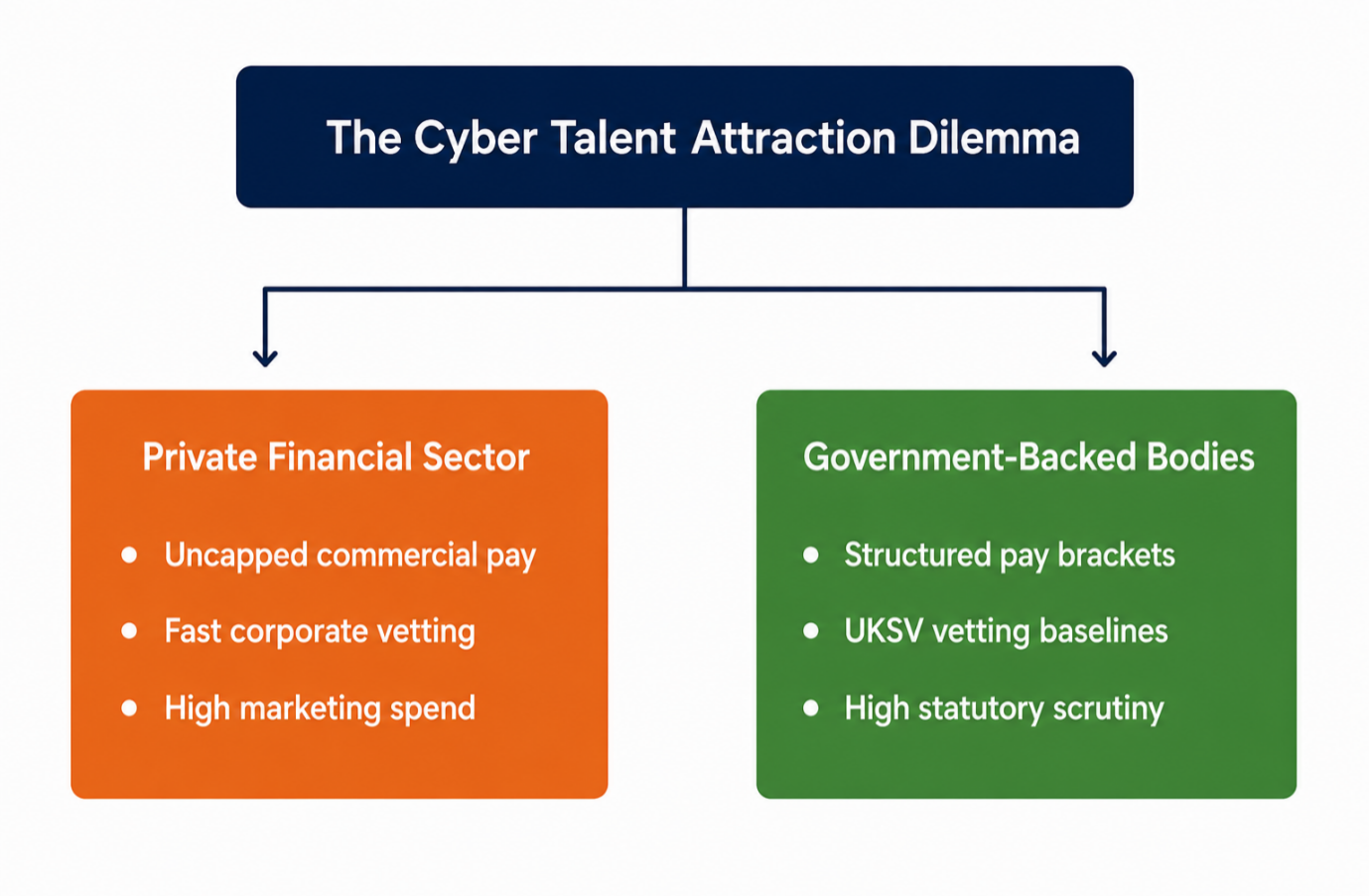
These government-backed bodies require specialists who can secure real-time gross settlement mechanisms, oversee complex algorithmic trading regulations, and safeguard multi-billion-pound national balance sheets. Consequently, they face two distinct recruitment hurdles:
- Direct commercial competition: They compete for the exact same talent pool of senior cyber architects, penetration testers, and risk directors as tier-one financial institutions and global consultancies.
- Transactional recruitment limitations: A traditional public sector recruitment agency typically relies on passive job adverts and contingent CV databases. However, senior cyber specialists who possess active UK national security clearance are rarely browsing open job boards. Engaging them requires targeted, peer-level headhunting that emphasizes the national significance and systemic importance of the work.
What cybersecurity skills and roles are in highest demand across the UK public sector?
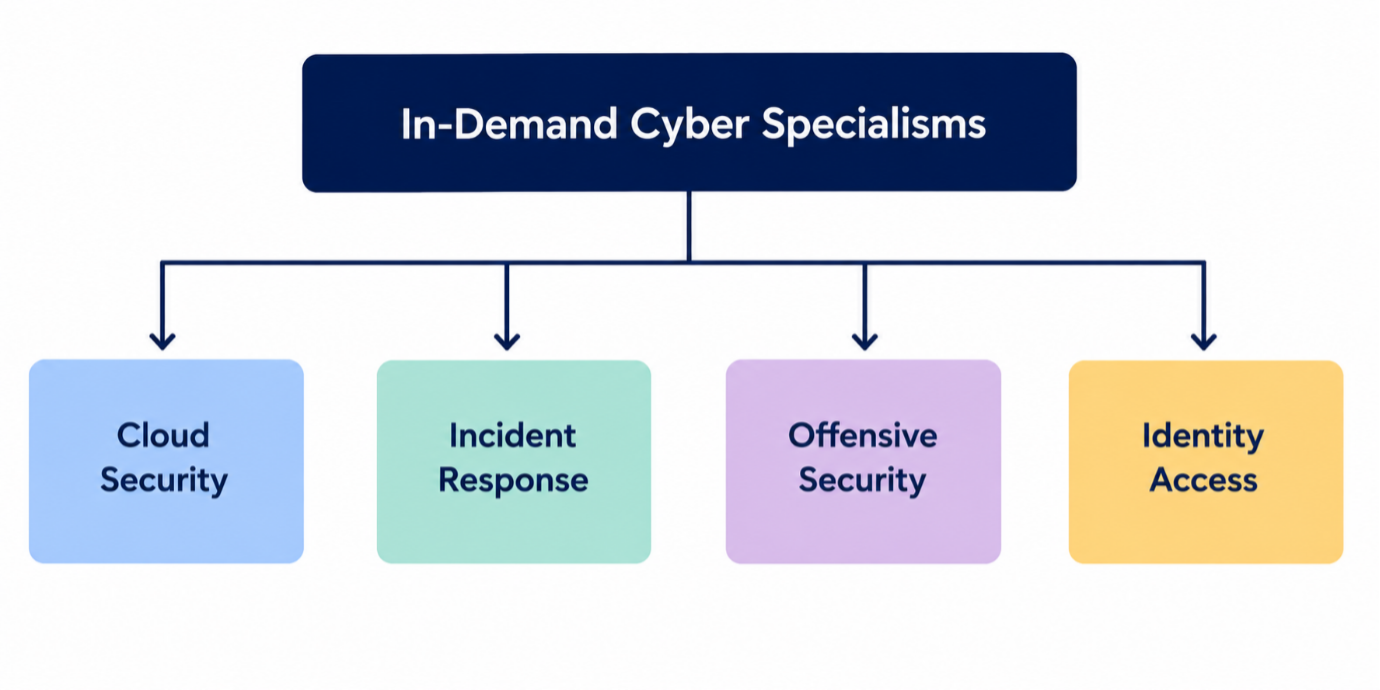
When shaping a public sector cyber recruitment strategy, understanding which technical capabilities deliver the greatest protection is essential. The core disciplines most in demand across government and statutory bodies include:
· Cloud security architecture: Designing and securing hybrid cloud environments across platforms like AWS, Microsoft Azure, and Google Cloud, backed by industry credentials such as CCSP and Microsoft Cybersecurity Architect certifications.
· Offensive security and penetration testing: Ethical hacking and stress-testing to uncover vulnerabilities in critical networks before threat actors can exploit them, typically requiring CHECK Team Leader, CREST, or OSCP accreditations.
· Incident response and threat intelligence: Active Security Operations Centre (SOC) monitoring, SIEM optimisation, and rapid threat mitigation to neutralise digital risks in real time.
· Identity and access management (IAM): Embedding Zero Trust principles to ensure only verified users and devices can access sensitive public networks and citizen data.
· Governance, risk, and compliance (GRC): Aligning public infrastructure with National Cyber Security Centre (NCSC) frameworks, ISO 27001 standards, and government security mandates, led by qualified practitioners holding CISSP, CISM, or CRISC certifications.
Prioritising these core disciplines ensures your public sector cyber recruitment targets the exact skills required to build robust, audit-ready digital defences.
How do public sector cyber salaries compare to the commercial market?
When building a resourcing strategy for public sector cyber recruitment, understanding current market compensation is essential. While private technology firms and investment banks can easily tempt specialists with uncapped bonuses, government-backed bodies must operate within structured civil service pay bands.
To secure elite talent, public organisations need to highlight their broader value proposition. This means showcasing excellent pension contributions, a healthy work-life balance, and the rare opportunity to defend critical citizen infrastructure against sophisticated threats.
The table below outlines typical salary and daily rate expectations across UK public sector cyber security and infrastructure functions:
What level of UK security clearance is required for public sector cyber roles?
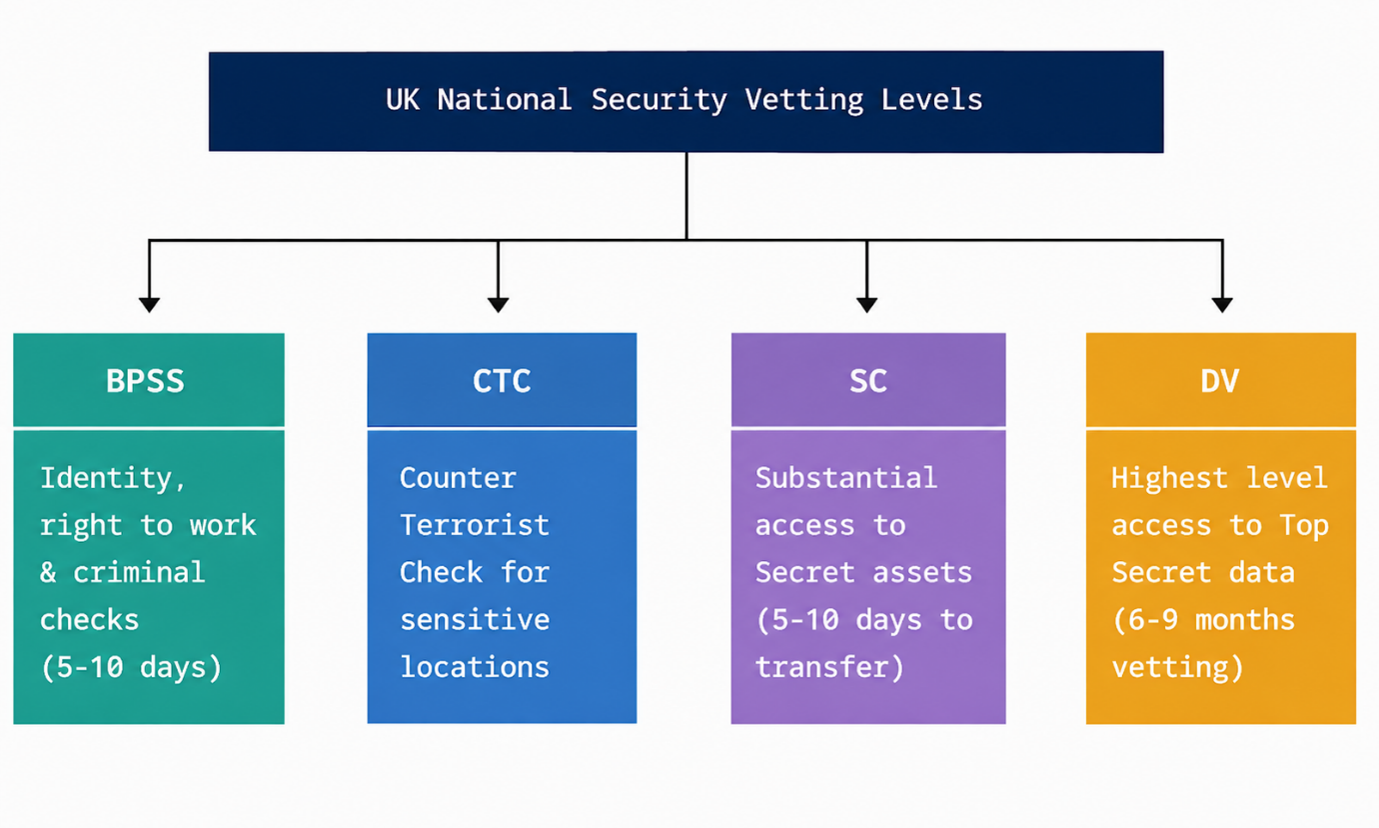
National security vetting is managed by United Kingdom Security Vetting (UKSV) to ensure individuals accessing sensitive state assets, infrastructure, and citizen data meet stringent reliability and integrity standards.
· Baseline Personnel Security Standard (BPSS): The foundational pre-employment standard confirming identity, nationality, employment history (minimum 3 years), and unspent criminal records. BPSS is not a formal clearance but a mandatory requirement before accessing UK government digital networks.
· Counter-Terrorist Check (CTC): Required for individuals working in close proximity to public figures, sensitive government locations, or critical national infrastructure sites.
· Security Check (SC): The most common level in public sector cyber recruitment, required for staff with frequent and uncontrolled access to SECRET government assets. SC clearance involves thorough credit, financial, and criminal background vetting and is typically valid for 5 to 10 years.
· Developed Vetting (DV): The highest tier of UK vetting, essential for roles requiring frequent, uncontrolled access to TOP SECRET assets or sensitive cyber defence intelligence. DV involves extensive personal interviews, financial reviews, and background investigations, often taking 6 to 9 months to complete.
Should public sector organisations recruit permanent staff, contractors, or digital squads?
When facing critical cyber capability gaps, public sector bodies must choose the optimal resourcing model based on urgency, operational control, and statutory governance. Relying solely on individual permanent hires can introduce unacceptable project delays when deadlines are fixed.
How should organisations design a defensible cyber executive search and assessment process?
Appointing a senior cybersecurity leader such as a Chief Information Security Officer or a Director of Operational Resilience carries high accountability. As outlined in our comprehensive guide to public sector recruitment, an assessment process that is superficial or generic risks hiring candidates whose commercial skills do not translate into complex public governance environments.
An end-to-end search partner does not apply a rigid, off-the-shelf assessment package to every engagement. The search, assessment, and selection process must be shaped specifically around the organisation, the role, and the unique operating context.
- Understand what success looks like: Before going to market, establish the tangible outcomes the leader must deliver in their first 12 to 24 months, defining the exact competencies, behaviours, and technical proficiencies required.
- Targeted market mapping: Proactively approach passive professionals across government, financial regulators, and adjacent commercial banking environments rather than waiting for active applicants.
- Modular evaluation methods: Where appropriate, integrate technical scenario exercises, psychometric assessments, strategic case presentations, and multi-stakeholder panel interviews into a cohesive candidate journey.
- Governed end-to-end execution: Manage the process through confidential approach, candidate care, rigorous vetting, referencing, offer negotiations, and 90-day structured onboarding.
Which UK procurement frameworks support compliant cyber capability resourcing?
Public procurement leads must maintain complete audit defensibility, value for money, and compliance with the Public Contracts Regulations. Bypassing independent tenders by using pre-approved Crown Commercial Service (CCS) agreements significantly accelerates public sector cyber recruitment.
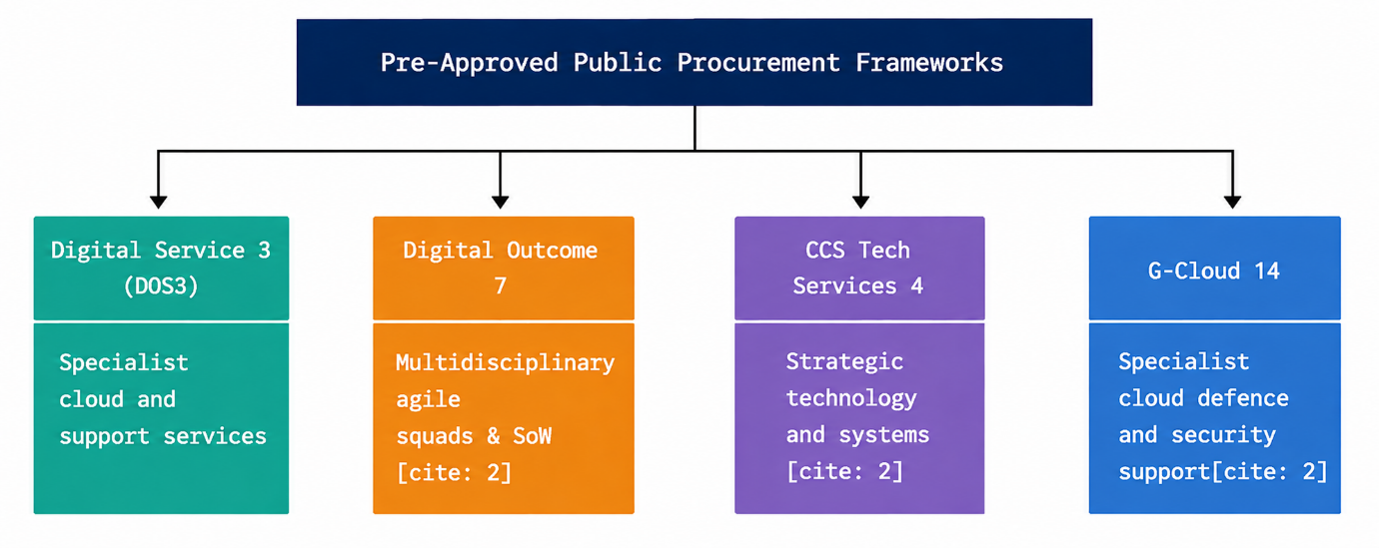
By procuring through these established lots, public bodies engage partners that hold audited ISO 27001, ISO 9001, and Cyber Essentials accreditations, ensuring that personnel and project delivery adhere to national data protection and security baselines.
Delivering assured cyber capability with Satigo
When public infrastructure is targeted and critical deadlines cannot move, public bodies cannot afford recruitment processes that stall or fail to evaluate role-fit properly.
Satigo operates as a dedicated digital capability partner for regulated organisations, government departments, and public finance entities. We combine deep technical expertise with flexible delivery models designed around your outcomes:
- Search Practice: Bespoke, diversity-led executive search that builds tailored assessment journeys to secure transformational CISOs, Directors of Cyber Security, and operational leaders.
- Digital Squads: Pre-qualified, security-cleared multidisciplinary squads deployed rapidly to build active cyber defence and maintain compliance under clear Statement of Work governance.
Closing the security gap with confidence
Securing the UK's public and financial infrastructure requires modern resourcing strategies built on proactive engagement and defensible assessment. Whether you need to appoint an executive cyber leader through a tailored search process or rapidly deploy security-cleared squads to protect critical systems, moving beyond generic recruitment models is the key to maintaining resilient public services.
To discuss how our framework-aligned capabilities can strengthen your organisation's digital defence, book a discovery call with our delivery team or submit your scoped Statement of Work to receive a costed delivery plan.